
When should I buy life insurance?

When should I buy life insurance?
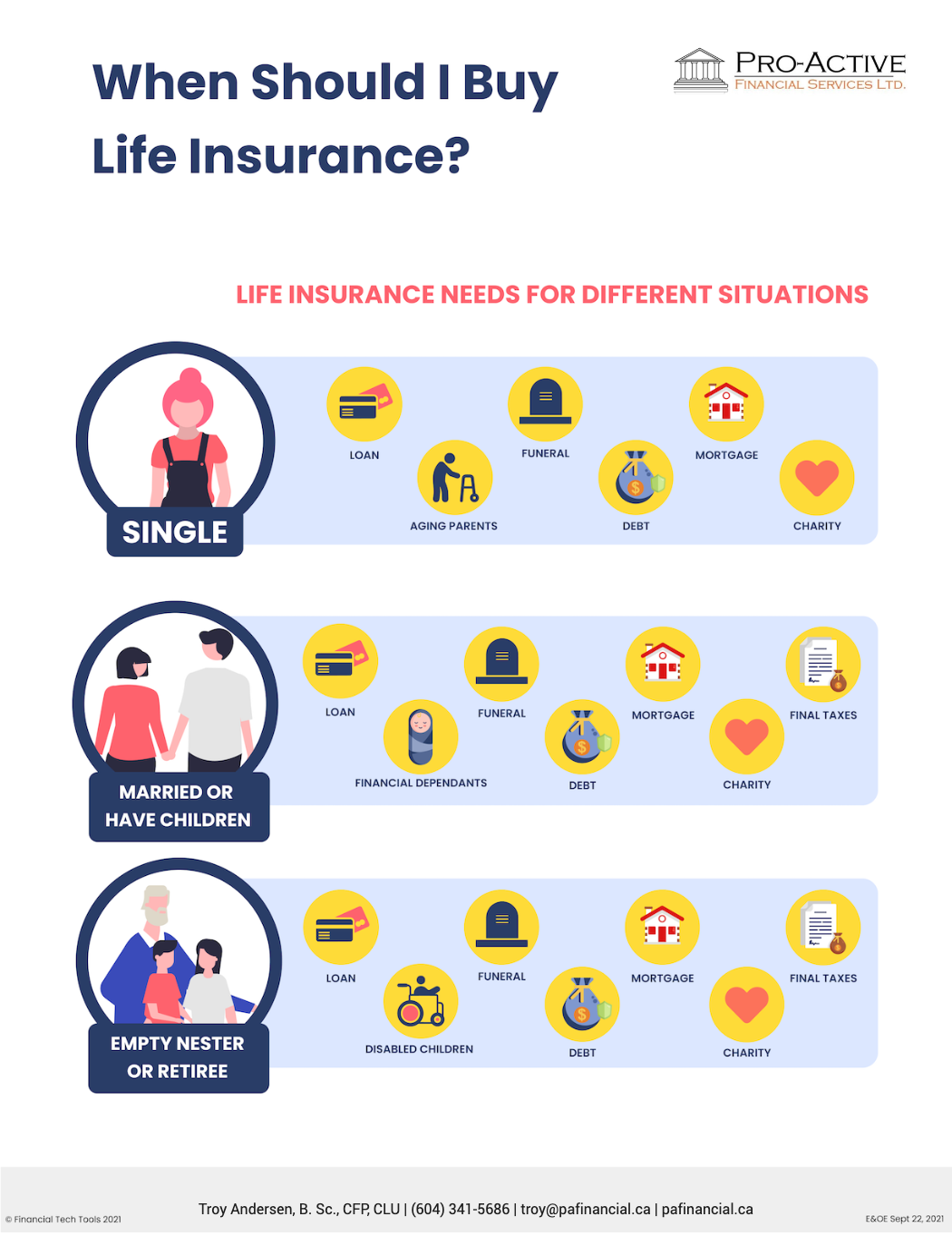
Life insurance can benefit you no matter what stage of life you’re at. It’s never too soon or too late to buy life insurance. Not only will it give you peace of mind, but it will also provide your loved ones with financial support after you die.

Types of life insurance

There are two main types of life insurance:

  1. Term life provides temporary coverage for a set amount of time (for example, 10, 15, or 20 years).

  2. Permanent coverage is life insurance that never expires.

Term life is generally cheaper as it is only good for a set amount of time. Permanent insurance will cost you more in the short run but may work out less expensive in the long run as your premiums do not tend to increase as you age.

Life insurance in your 20s

In your 20s, you may feel like you’re immortal and have lots of other things you want to spend your money on. But you also likely have responsibilities – such as student loans your parents may have co-signed for or a mortgage with your partner. If something happened to you, your loved ones would be left alone to pay for that debt. Life insurance could help fill this financial gap.

Also, another great reason to get life insurance in your 20s is that it’s very affordable! You will have a low insurance premium because you are considered low risk.

Life insurance in your 30s

By the time you’re in your 30s, you may have several financial responsibilities – including a mortgage and children. If you’ve only had term insurance up to this point, you may want to consider converting it to permanent to help give yourself lifelong protection.

Even if you have life insurance through your workplace, you may want to buy additional life insurance. Separate life insurance can help cover you if you lose your job or lock-in rates while you are relatively young and healthy.

Life insurance in your 40s, 50s, 60s and beyond

At this stage in your life, you may still have a mortgage or dependent children. You may have even bought a cottage or a vacation property. No matter your financial responsibilities, if your estate doesn’t have enough cash to cover them, it’s essential to have life insurance still.

Now is an excellent time to lock in permanent insurance. However, if you find the premiums too high or know you only need life insurance for a set amount of time, term life may still work for you.

Your next steps

Now you know about the two main types of life insurance and why it’s crucial to have it, no matter what age you are. If you’re not sure where to go from here, contact your insurance advisor or us – we can help you figure out your next steps!

Saving for Education

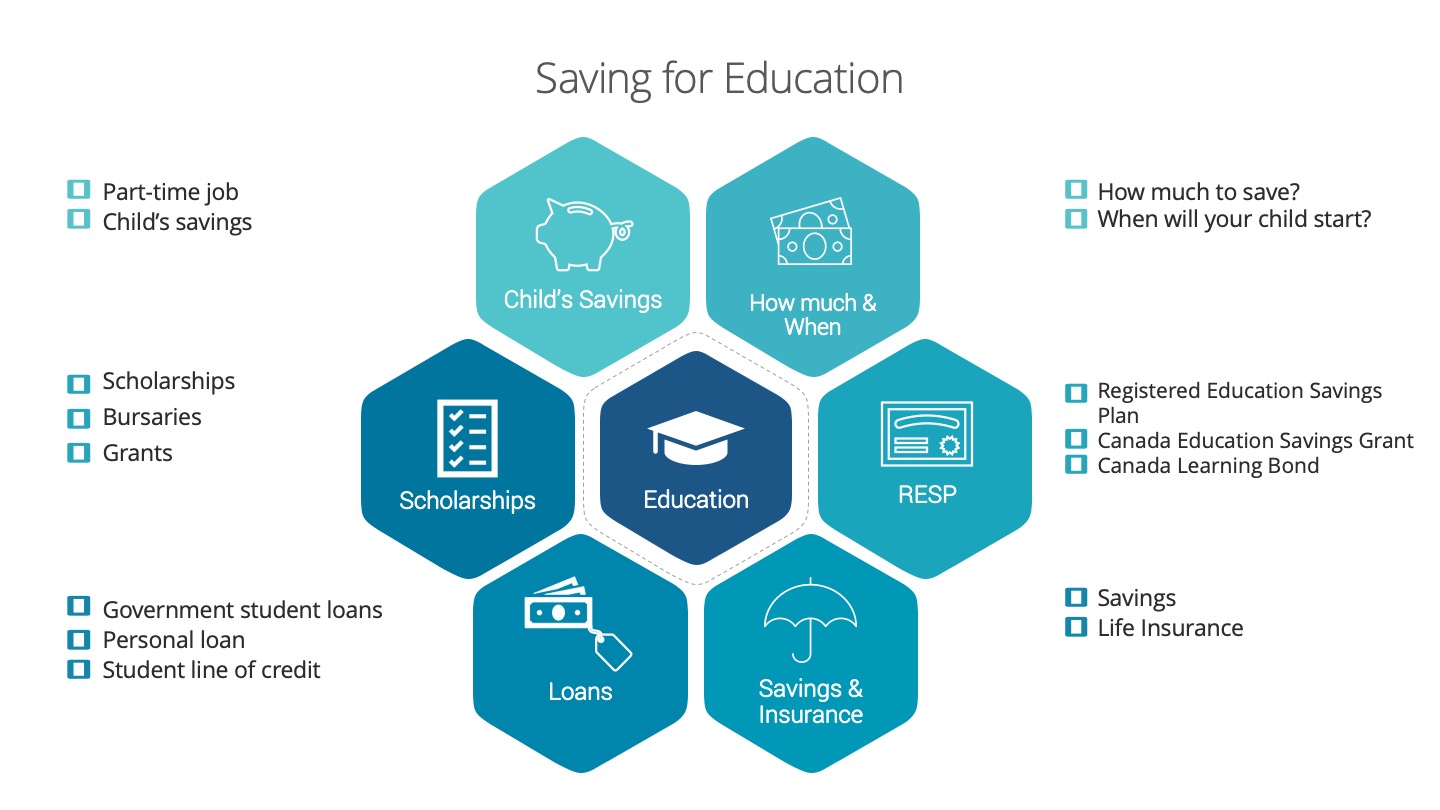
Post-secondary education can be expensive, however, having the opportunity to plan for it helps with making sure that you’re capable to meet the costs of education. In addition, when you have a plan, it’s easier to make financial decisions that align with your goals and provide peace of mind. In the infographic checklist, we outline 6 factors to consider when paying for education: 

For parents:

  • How much to save and when will your child start school?

  • Registered Education Savings Plan – have you set up a family RESP plan and received the Canadian Education Savings Grant? If your income is low enough, you could qualify for the Canada Learning Bond.

  • Savings- are you saving separately for your child’s education? Cash Value Life Insurance- have you considered using this as a savings vehicle for your child’s education. What happens if your child decides not to go to school? These alternative savings vehicles provide flexibility so that you can use the funds for something else such as a down payment for a future home.

For children:

  • Will the child be working part-time and have their own savings for school?

  • Can the child apply for scholarships, bursaries or grants?

  • Will they need to apply for government student loan, personal loan or personal line of credit?

If you need help planning to save for your child’s post-secondary education, contact us!

When and Why You Should Conduct an Insurance Audit

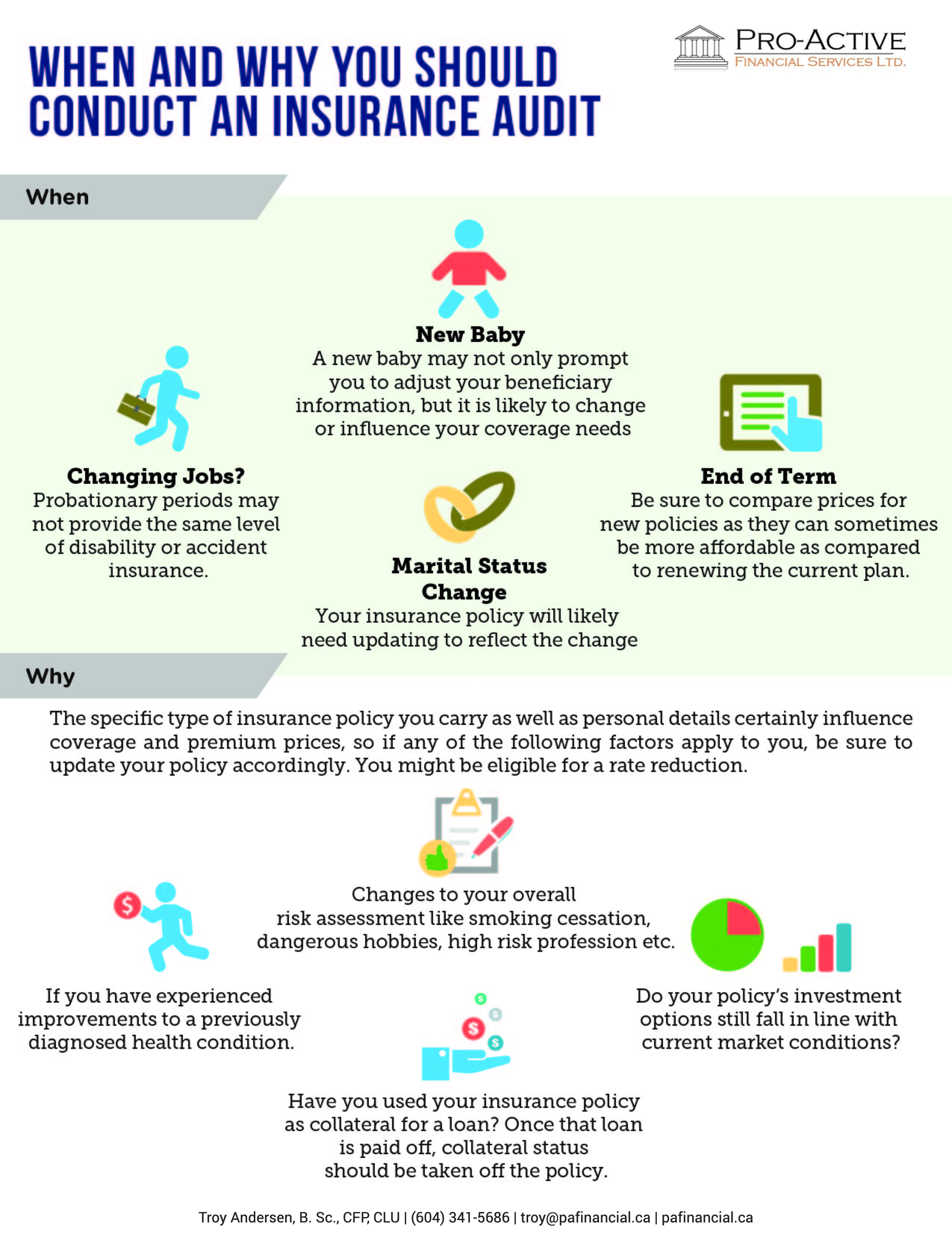
As our lives grow and change with variable circumstances, new additions, and job transitions, our needs for insurance will also evolve. Additionally, economic fluctuations and external circumstances that influence your insurance policy will need frequent re-evaluation to ensure that you are making the most appropriate and financially favorable decisions. Perhaps you aren’t sure whether you should conduct an insurance audit or not. The following scenarios are usually a good indication that you should thoroughly assess and review your current policy contract: 

  • Bringing new life into your family? A new baby may not only prompt you to adjust your beneficiary information, but it is likely to change or influence your coverage needs.

  • Changing jobs? Probationary periods may not provide the same level of disability or accident insurance.

  • Is your policy nearing the end of its term? Be sure to compare prices for new policies as they can sometimes be more affordable as compared to renewing the current plan.

  • Has your marital status changed? Your insurance policy will likely need updating to reflect such.

The specific type of insurance policy you carry as well as personal details certainly influence coverage and premium prices, so if any of the following factors apply to you, be sure to update your policy accordingly. You might be eligible for a rate reduction. 

  • Changes to your overall risk assessment like smoking cessation, dangerous hobbies, high risk profession etc.

  • If you have experienced improvements to a previously diagnosed health condition.

  • Do your policy’s investment options still fall in line with current market conditions?

  • Have you used your insurance policy as collateral for a loan? Once that loan is paid off, collateral status should be taken off the policy.

Insurance policies generated for business purposes should also be regularly reviewed to make sure the policy still offers adequate coverage to meet the needs of the company and includes the appropriate beneficiary information. With life happening so quickly, it can be easy to forget about keeping insurance policies up to date, however, major changes can have a profound impact on coverage and premiums. Be sure to conduct insurance audits often to ensure your policies are still meeting your needs. 

Contact us to see how we can help. 

Group Insurance vs Individual Life Insurance

Group Insurance vs Individual Life Insurance

“I already have life insurance from work, so why do I need to get it personally?” or “Work has got me covered, I don’t need it.”

While it’s great to have group coverage from your employer or association, in most cases, people don’t understand that there are important differences when it comes to group life insurance vs. self owned life insurance.

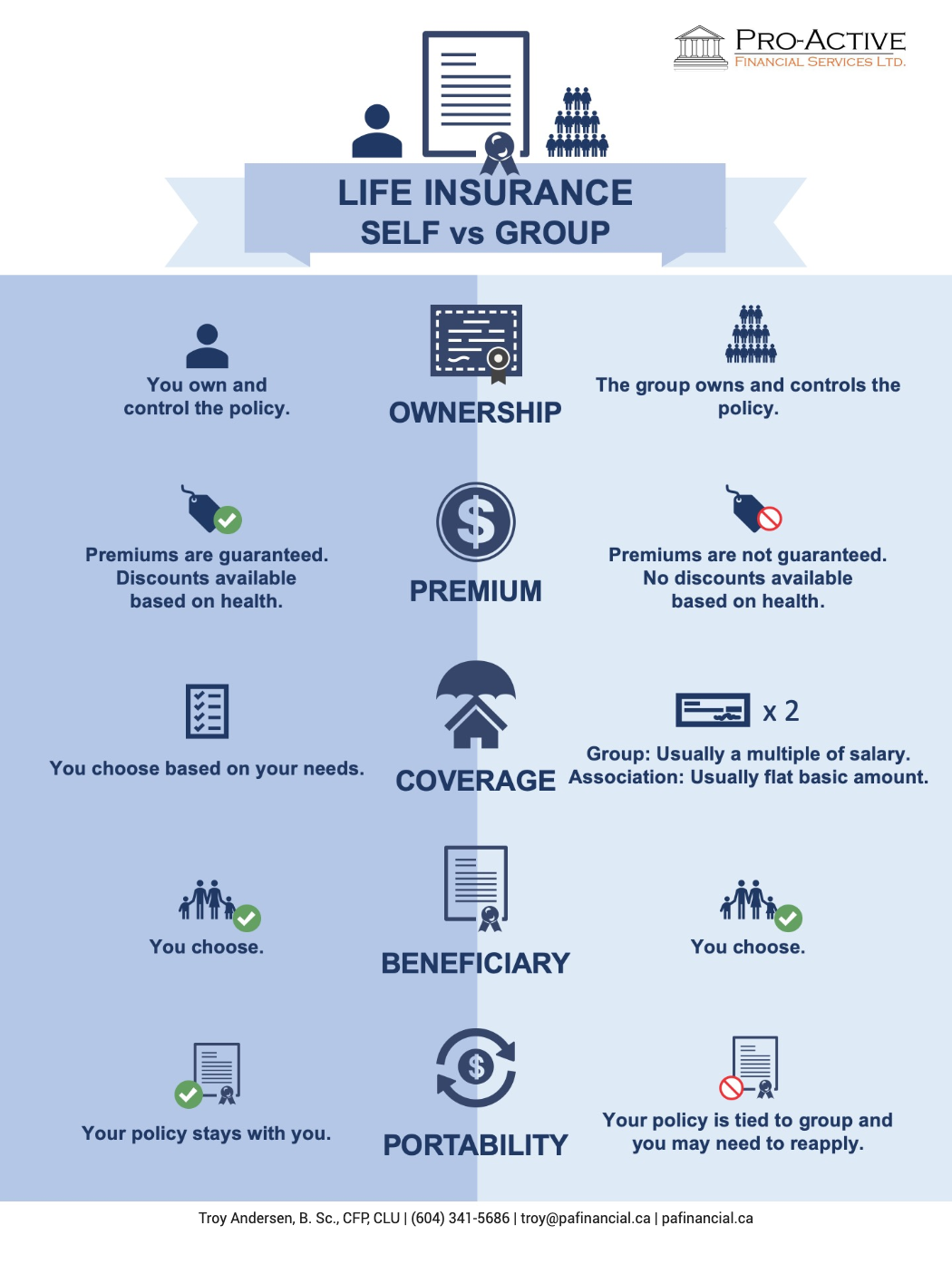
Before counting on insurance from your group benefits plan, please take the time to understand the difference between group owned life insurance and personally owned life insurance. The key differences are ownership, premium, coverage, beneficiary and portability.

Ownership:

  • Self: You own and control the policy.

  • Group: The group owns and controls the policy.

Premium:

  • Self: Your premiums are guaranteed at policy issue and discounts are available based on your health.

  • Group: Premiums are not guaranteed and there are no discounts available based on your health. The rates provided are blended depending on your group.

Coverage:

  • Self: You choose based on your needs.

  • Group: In a group plan, the coverage is typically a multiple of your salary. If your coverage is through an association, then it’s usually a flat basic amount.

Beneficiary:

  • Self: You choose who your beneficiary is and they can choose how they want to use the insurance benefit.

  • Group: You choose who your beneficiary is and they can choose how they want to use the insurance benefit.

Portability:

  • Self: Your policy stays with you.

  • Group: Your policy is tied to your group and if you leave your employer or your association, you may need to reapply for insurance.

Talk to us, we can help you figure out what’s best for your situation.

The Need for Personal Life Insurance

At different stages of life, the need for life insurance will vary, here’s a list of reasons for life insurance:

  • Young Singles/Young Couples- cover off any debt including debts with co-signers,  final expenses, does your family history have significant health issues?

  • Young Family – debts, mortgage, final expenses, ongoing income needs, education fund

  • Maturing Family- debts, mortgage, final expenses, ongoing income needs, education fund

  • Pre-Retirees- debts, mortgage, final expenses, ongoing income needs, final taxes

  • Retirees – debts, final expenses, leave a legacy, final taxes

The Best Way to Buy Mortgage Insurance

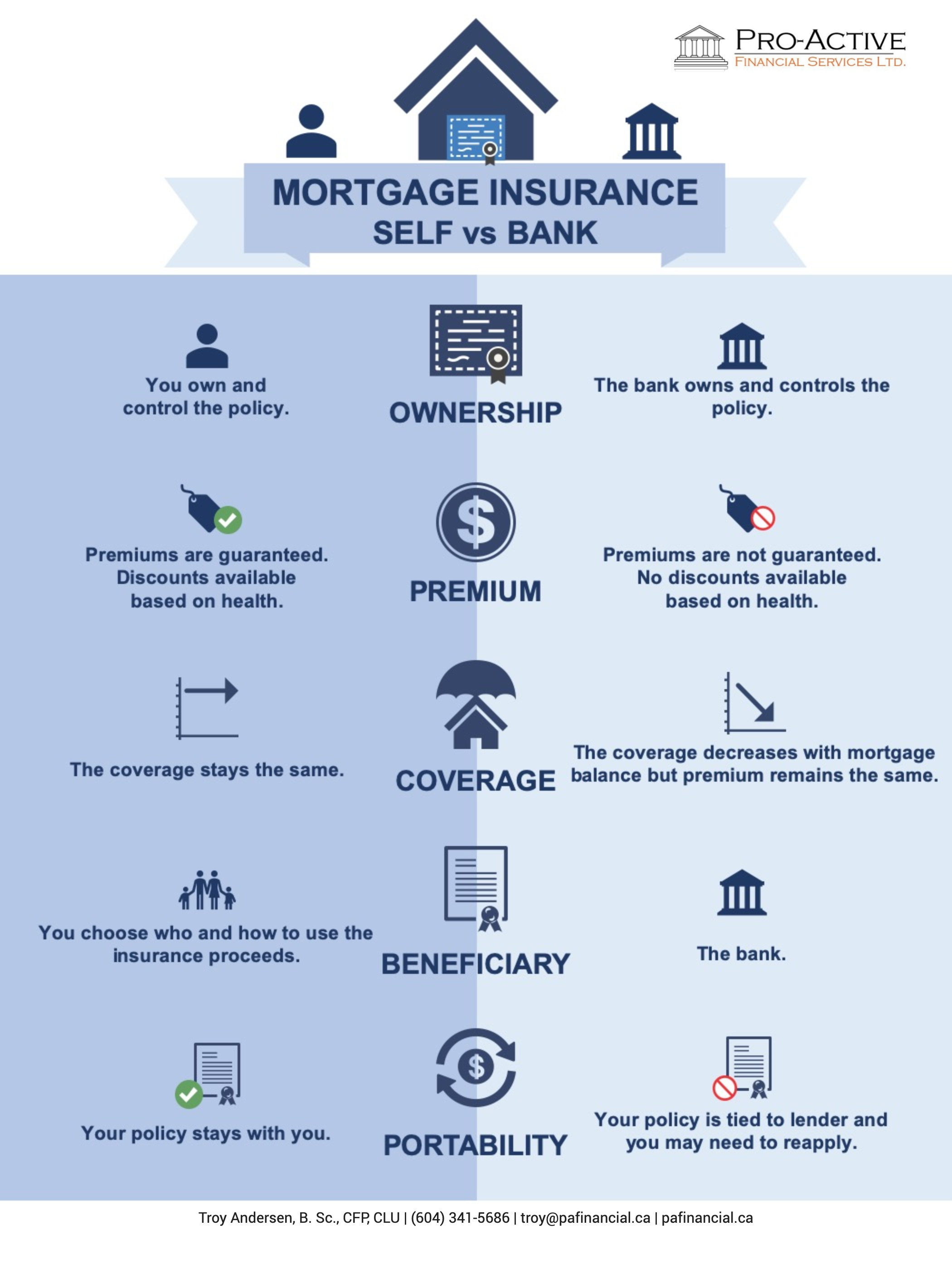
Before buying insurance from your bank to cover your mortgage, understand the difference between self owned mortgage life insurance and bank owned life insurance. The key differences are ownership, premium, coverage, beneficiaries and portability.

Ownership:

  • Self: You own and control the policy.

  • Bank: The bank owns and controls the policy.

Premium:

  • Self: Your premiums are guaranteed at policy issue and discounts are available based on your health.

  • Bank: Premiums are not guaranteed and there are no discounts available based on your health.

Coverage:

  • Self: The coverage that you apply for remains the same.

  • Bank: The coverage is tied to your mortgage balance therefore it decreases as you pay down your mortgage but the premium stays the same.

Beneficiary:

  • Self: You choose who your beneficiary is and they can choose how they want to use the insurance benefit.

  • Bank: The bank is beneficiary and only pays off your mortgage.

Portability:

  • Self: Your policy stays with you regardless of your lender.

  • Bank: Your policy is tied to your lender and if you change, you may need to reapply for insurance.

We’ve created an infographic about the difference between personally owned life insurance vs. bank owned life insurance.

Talk to us, we can help.

Insurance Planning for Business Owners

For business owners, making sure your business is financially protected can be overwhelming. Business owners face a unique set of challenges when it comes to managing risk. Insurance can play an important role when it comes to reducing the financial impact on your business in the case of uncontrollable events such as disability, critical illness or loss of a key shareholder or employee.

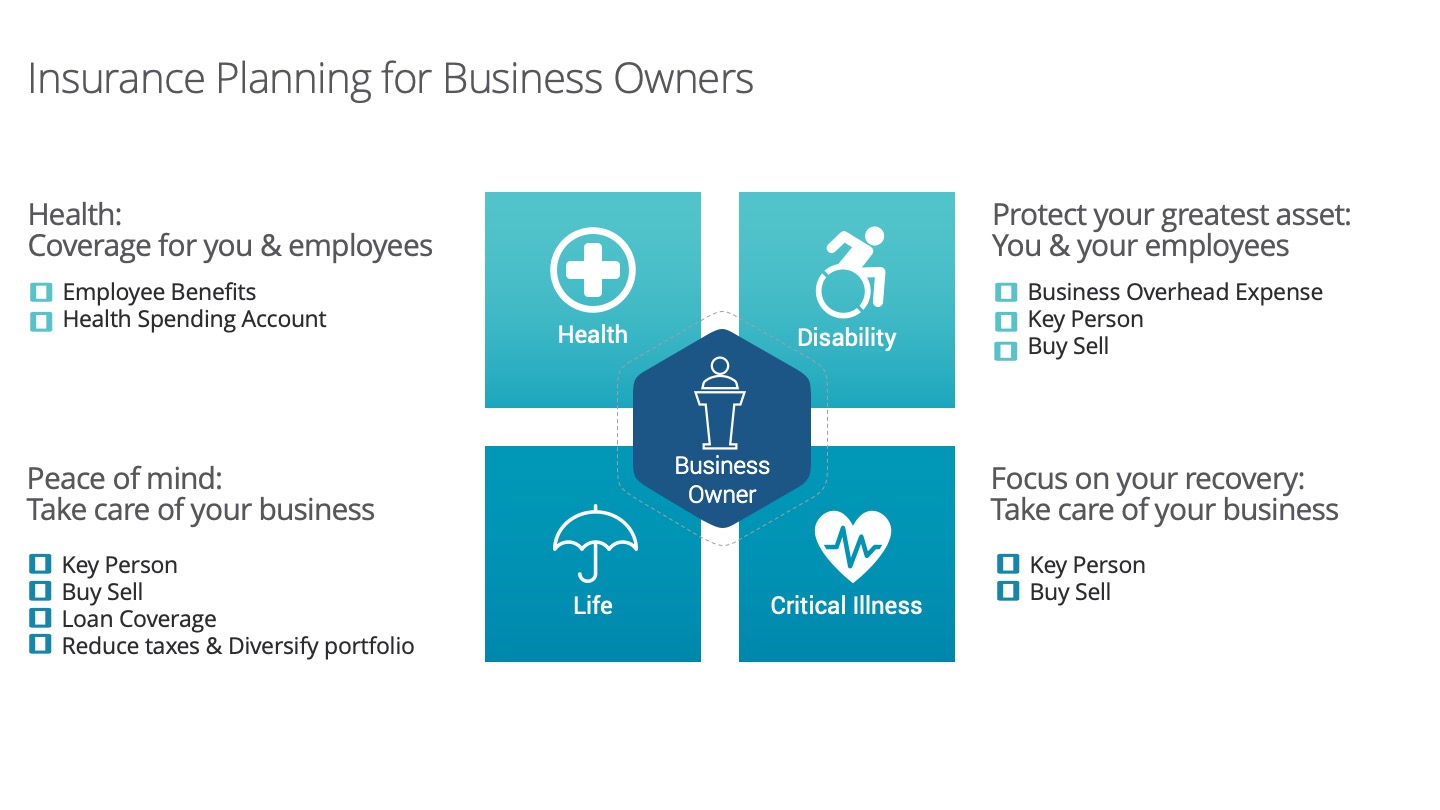
This infographic addresses the importance of corporate insurance.

The 4 areas of  insurance a business owner should take care of are:

  • Health

  • Disability

  • Critical Illness

  • Life

Health: We are fortunate in Canada, where the healthcare system pays for basic healthcare services for Canadian citizens and permanent residents. However, not everything healthcare related is covered, in reality, 30% of our health costs* are paid for out of pocket or through private insurance such as prescription medication, dental, prescription glasses, physiotherapy, etc.

For business owners, offering employee health benefits make smart business sense because health benefits can form part of a compensation package and can help retain key employees and attract new talent.

For business owners that are looking to provide alternative health plans in a cost effective manner, you may want to consider a health spending account.

Disability: Most people spend money on protecting their home and car, but many overlook protecting their greatest asset: their ability to earn income. Unfortunately one in three people on average will be disabled for 90 days or more at least once before the age of 65.

Consider the financial impact this would have on your business if you, a key employee or shareholder were to suffer from an injury or illness. Disability insurance can provide a monthly income to help keep your business running.

Business overhead expense insurance can provide monthly reimbursement of expenses during total disability such as rent for commercial space, utilities, employee salaries and benefits, equipment leasing costs, accounting fees, insurance premiums for property and liability, etc.

Key person disability insurance can be used to provide monthly funds for the key employee while they’re disabled and protect the business from lost revenue while your business finds and trains an appropriate replacement.

Buy sell disability insurance can provide you with a lump sum payment if your business partner were to become totally disabled. These funds can be used to purchase the shares of the disabled partner, fund a buy sell agreement and reassure creditors and suppliers.

Critical Illness: For a lot of us, the idea of experiencing a critical illness such as a heart attack, stroke or cancer can seem unlikely, but almost 3 in 4 (73%) working Canadians know someone who experience a serious illness. Sadly, this can have serious consequences on you, your family and business, with Critical Illness insurance, it provides a lump sum payment so you can focus on your recovery.

Key person critical illness insurance can be used to provide funds to the company so it can supplement income during time away, cover debt repayment, salary for key employees or fixed overhead expenses.

Buy sell critical illness insurance can provide you with a lump sum payment if your business partner or shareholder were to suffer from a critical illness. These funds can be used to purchase the shares of the partner, fund a buy sell agreement and reassure creditors and suppliers.

Life: For a business owner, not only do your employees depend on you for financial support but your loved ones do too. Life insurance is important because it can protect your business and also be another form of investment for excess company funds.

Key person life insurance can be used to provide a lump sum payment to the company on death of the insured so it can keep the business going until you an appropriate replacement is found. It can also be used to retain loyal employees by supplying a retirement fund inside the insurance policy.

Buy sell life insurance can provide you with a lump sum payment if your business partner or shareholder were to pass away. These funds can be used to purchase the shares of the deceased partner, fund a buy sell agreement and reassure creditors and suppliers.

Loan coverage life insurance can help cover off any outstanding business loans and debts.

Reduce taxes & diversify your portfolio, often life insurance is viewed only as protection, however with permanent life insurance, there is an option to deposit excess company funds not needed for operations to provide for tax-free growth (within government limits)  to diversify your portfolio and reduce taxes on passive investments.

Talk to us about helping making sure you and your business are protected.

Insurance Planning for Young Families

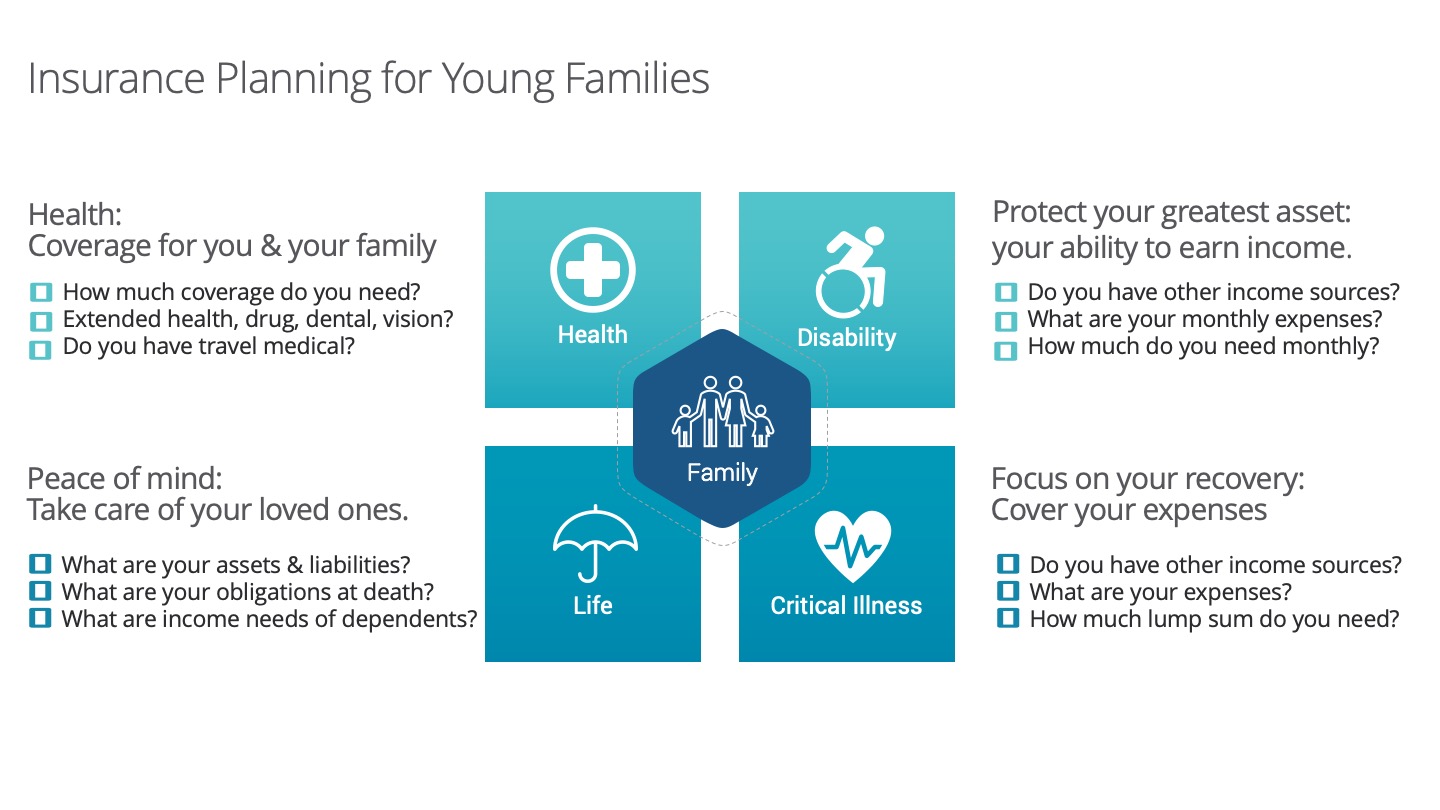
For young families, making sure your family is financially protected can be overwhelming, especially since there’s so much information floating online. This infographic addresses the importance of insurance- personal insurance.

The 4 areas of personal insurance a young family should take care of are:

  • Health

  • Disability

  • Critical Illness

  • Life

Health: We are so fortunate to live in Canada, where the healthcare system pays for basic healthcare services for Canadian citizens and permanent residents. However, not everything healthcare related is covered, in reality, 30% of our health costs* are paid for out of pocket or through private insurance such as prescription medication, dental, prescription glasses, physiotherapy, etc.. Moreover, if you travel outside of Canada, medical emergencies can be extremely expensive.

Disability: Most people spend money on protecting their home and car, but many overlook protecting their greatest asset: their ability to earn income. Unfortunately one in three people on average will be disabled for 90 days or more at least once before age 65. Disability insurance can provide you with a portion of your income if you were to become disabled and unable to earn an income.

Critical Illness: For a lot of us, the idea of experiencing a critical illness such as a heart attack, stroke or cancer can seem unlikely, but almost 3 in 4 (73%) working Canadians know someone who experience a serious illness. Sadly, this can have serious consequences on you and your family, with Critical Illness insurance, it provides a lump sum payment so you can focus on your recovery.

Life: For young families, if your loved ones depend on you for financial support, then life insurance is absolutely necessary, because it replaces your income, pay off your debts and provides peace of mind.

Talk to us about helping making sure you and your family are protected.

Guide to Covid-19: Government Relief Programs in Canada

The intention for our “Guide to Covid-19: Government Relief Programs in Canada” is to help businesses and individuals to cut through the noise and make sure they’re getting all the help they can receive from the federal and provincial programs.

Federal programs include:

  • Small Business Wage Subsidy

  • Canada Emergency Wage Subsidy

  • Canada Emergency Business Account

  • Canada Emergency Response Benefit

  • Student Loan Programs

Individual provincial programs include:

  • Utilities

  • Housing

  • Student Loan Programs