
Tax Lines to Look Out For on Your 2025 Canadian Tax Return

Tax Lines to Look Out For on Your 2025 Canadian Tax Return

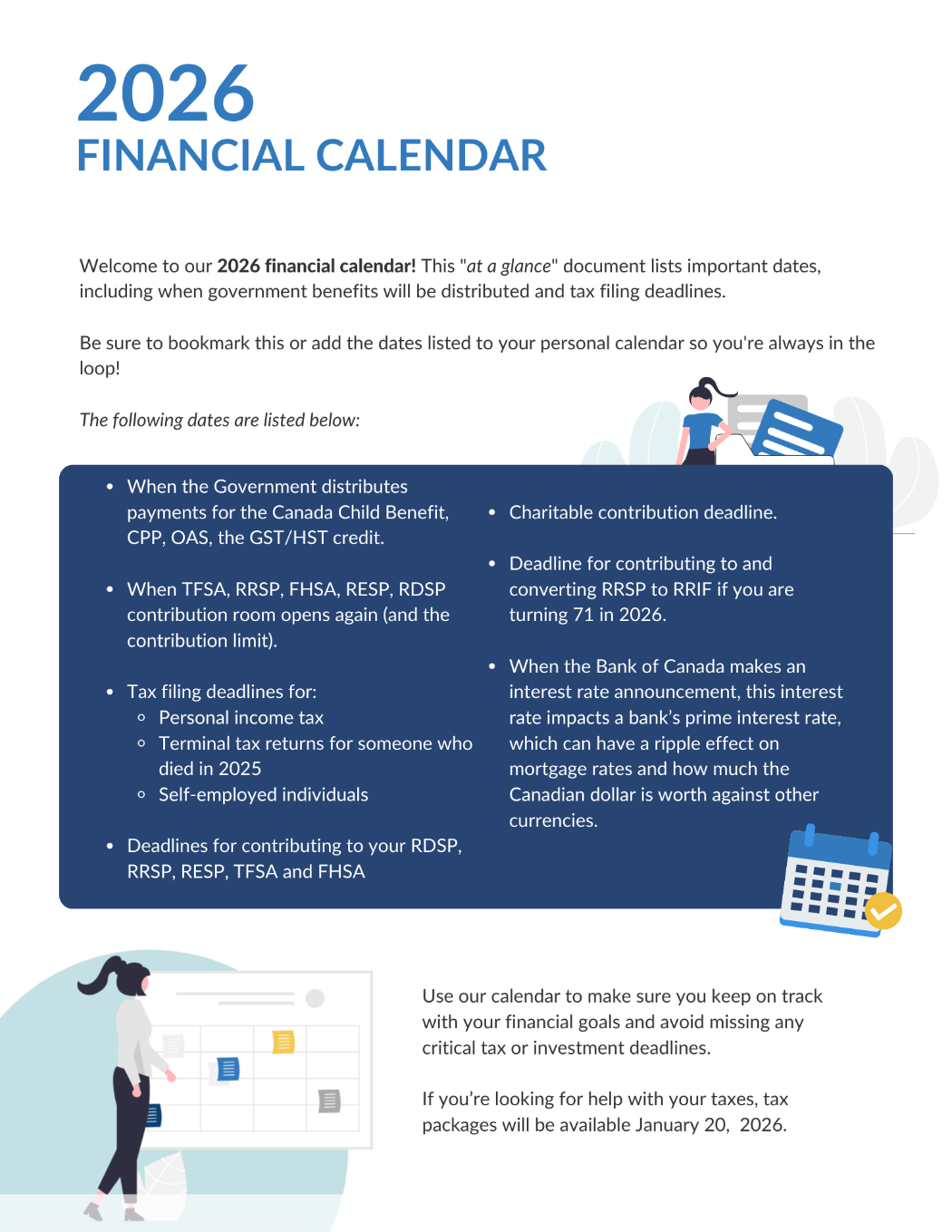
The deadline for filing your 2025 income tax return is April 30, 2026. With several changes this year, from a lower federal tax rate to new benefits and eliminated credits, it pays to know what has changed before you file. This guide covers the key updates, deductions, and credits separated into sections for Individuals and Families, and Self-Employed Individuals.

For Individuals and Families

Federal Tax Rate Reduction

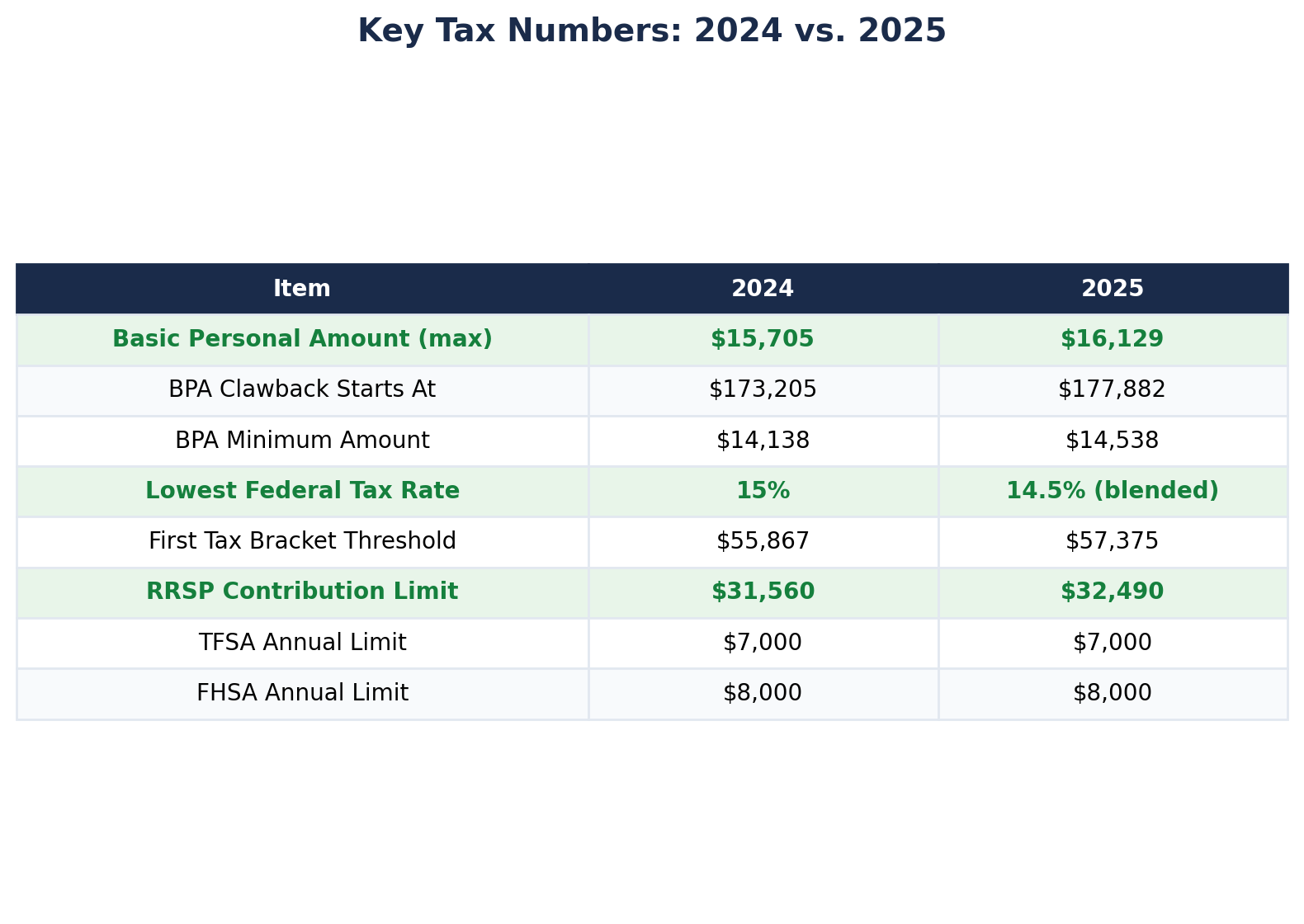
Effective July 1, 2025, under draft legislation introduced May 27, 2025, the lowest federal income tax rate was reduced from 15% to 14%. Because this change took effect halfway through the year, the blended rate for 2025 is 14.5%. This applies to the first $57,375 of taxable income and could save an individual up to $420 per year, or up to $840 for a two-income household.

Because the lowest rate also determines the value of most non-refundable tax credits, the government introduced a new top-up credit. This credit restores the full 15% value on eligible non-refundable credits claimed on amounts above $57,375, so the rate cut does not reduce the value of credits like the Basic Personal Amount, medical expenses, or tuition. This top-up credit will remain in place through the 2030 tax year.

Basic Personal Amount (BPA)

For 2025, the Basic Personal Amount has increased to $16,129 for taxpayers with net income up to $177,882. For those with net incomes above this amount, the BPA is gradually reduced, reaching a minimum of $14,538 at incomes of $253,414 or higher.

Capital Gains

The proposed increase in the capital gains inclusion rate from 50% to 66.67% on gains over $250,000 for individuals (and on all gains for corporations and most trusts) has been cancelled. The inclusion rate remains at 50% for all taxpayers. However, the lifetime capital gains exemption has been raised to $1,250,000 for qualifying dispositions of small business shares and farming or fishing property, up from $1,016,836.

Canada Disability Benefit

A new benefit became available in June 2025, providing up to $200 per month ($2,400 per year) for Canadian residents aged 18 to 64 who are approved for the Disability Tax Credit.

The benefit is income-tested, with the maximum amount generally available to single individuals with adjusted family net income of $23,000 or less. For couples, the threshold is higher (generally $32,500 after a working income exemption).

The benefit is gradually reduced as income increases. For single individuals, it is typically reduced by 20 cents for each dollar above the threshold. For couples, the reduction may be 20% or split at 10% each, depending on whether one or both partners qualify for the benefit.

What Has Been Eliminated

Canadian Journalism Tax Credit: The 15% non-refundable tax credit for qualifying digital news subscriptions (up to $75 per year) is no longer available for 2025.

Home Accessibility and Medical Expense Double-Claim: Under proposed measures announced in Budget 2025 and included in Bill C-15, 2025 is expected to be the final year that certain expenses qualifying for the Home Accessibility Tax Credit can also be claimed as a medical expense. Starting in 2026, these expenses will generally need to be claimed under only one provision and cannot be double-counted. Individuals planning eligible renovations may wish to take advantage of the current rules before this change takes effect.

Alternative Minimum Tax (AMT)

The updated AMT rules that took effect in 2024 continue to apply. These include a higher minimum tax rate, modified calculation for adjusted taxable income affecting foreign tax credits and minimum tax carryovers, and limited value on most non-refundable tax credits.

Popular Tax Credits and Deductions

Canada Training Credit (CTC) Eligible taxpayers aged 26 to 65 can claim this refundable tax credit to cover a portion of eligible tuition and fees for training or courses to enhance their skills.

Canada Caregiver Credit (CCC) This non-refundable tax credit supports individuals caring for family members or dependents with a physical or mental impairment. The amount varies based on the dependent’s relationship, net income, and circumstances.

Child Care Expenses Child care expenses, such as daycare, nursery schools, day camps, and boarding schools, are deductible if incurred to enable a parent or guardian to work, pursue education, or conduct research.

Disability Tax Credit (DTC) The DTC provides a non-refundable tax credit for individuals with disabilities or their caregivers to reduce the amount of income tax payable. For 2025, the disability amount is $10,138. Applicants must have a certified disability lasting at least 12 months. The expenses eligible for the disability supports deduction have also been expanded for 2025.

Moving Expenses Deductible moving expenses include transportation and storage costs, travel expenses, temporary living costs, and incidental expenses incurred when relocating at least 40 kilometers closer to a new work location, educational institution, or business location.

Interest Paid on Student Loans Interest paid on eligible student loans can be claimed as a non-refundable tax credit. The loans must be under federal, provincial, or territorial student loan programs.

Donations and Gifts Donations made to registered charities or other qualified organizations qualify for non-refundable federal and provincial tax credits. Typically, eligible amounts up to 75% of net income can be claimed. Note: due to the Canada Post strike in late 2024, eligible donations made in the first two months of 2025 can also be claimed on a 2024 return.

GST/HST Credit The GST/HST credit is a quarterly refundable payment designed to offset the impact of sales tax on low to moderate-income individuals and families. Eligibility is automatically assessed based on the annual tax return.

RRSP Contributions The maximum RRSP contribution for 2025 has increased to $32,490 (up from $31,560 in 2024), based on 18% of the previous year’s earned income. The TFSA annual contribution limit remains at $7,000 for 2025.

First Home Savings Account (FHSA) Contributions of up to $8,000 per year (lifetime limit of $40,000) are tax-deductible, grow tax-free, and qualifying withdrawals for a first home purchase are also tax-free. The FHSA can be used alongside the Home Buyers’ Plan, which maintains a withdrawal limit of $60,000.

For Self-Employed Individuals

CPP Contributions

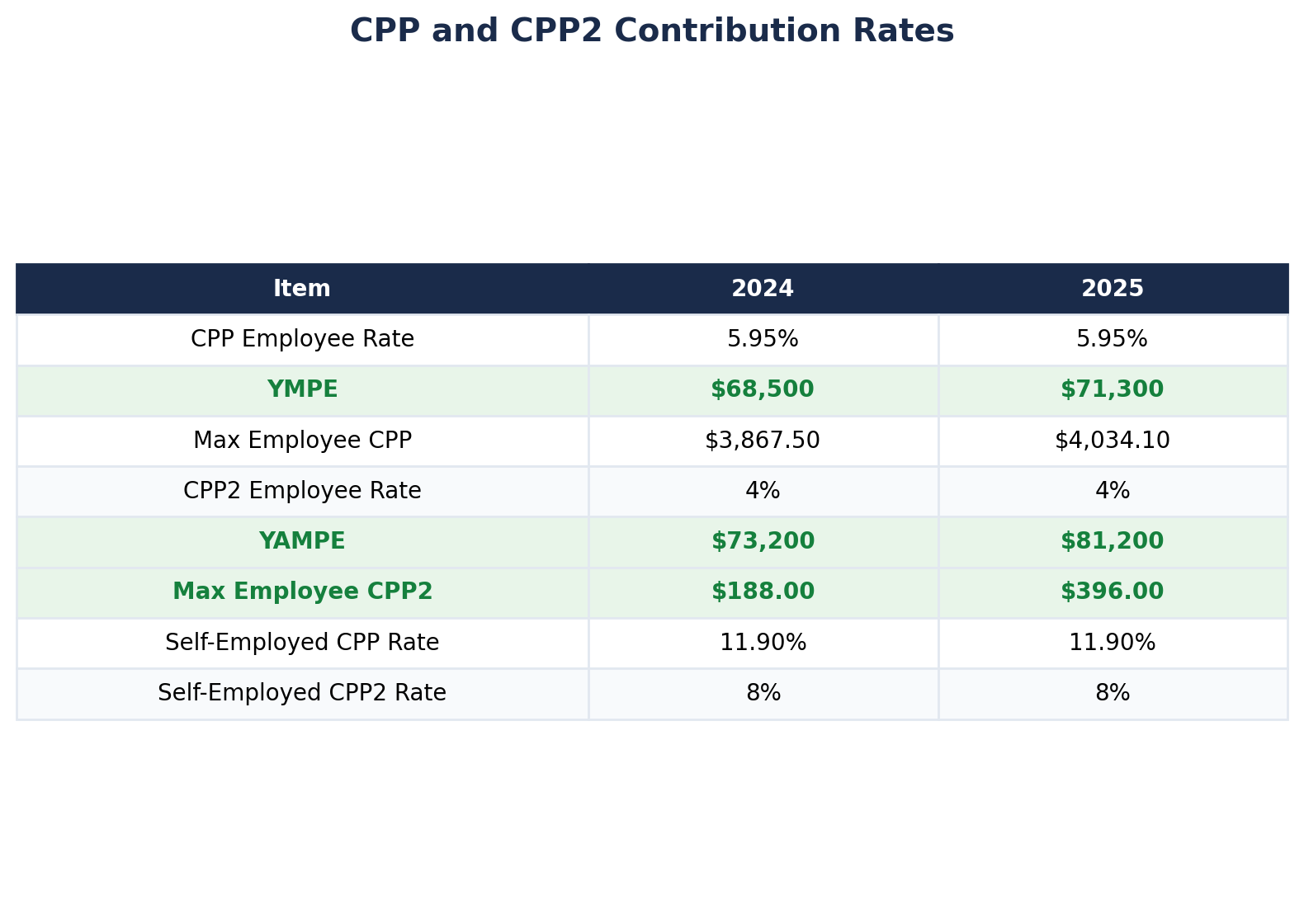
Self-employed individuals pay both the employee and employer portions of CPP, for a combined rate of 11.90% on earnings up to the YMPE ($71,300). For CPP2, the self-employed rate is 8% on earnings between $71,300 and $81,200, with a maximum CPP2 contribution of $792.

Filing and Payment Deadlines

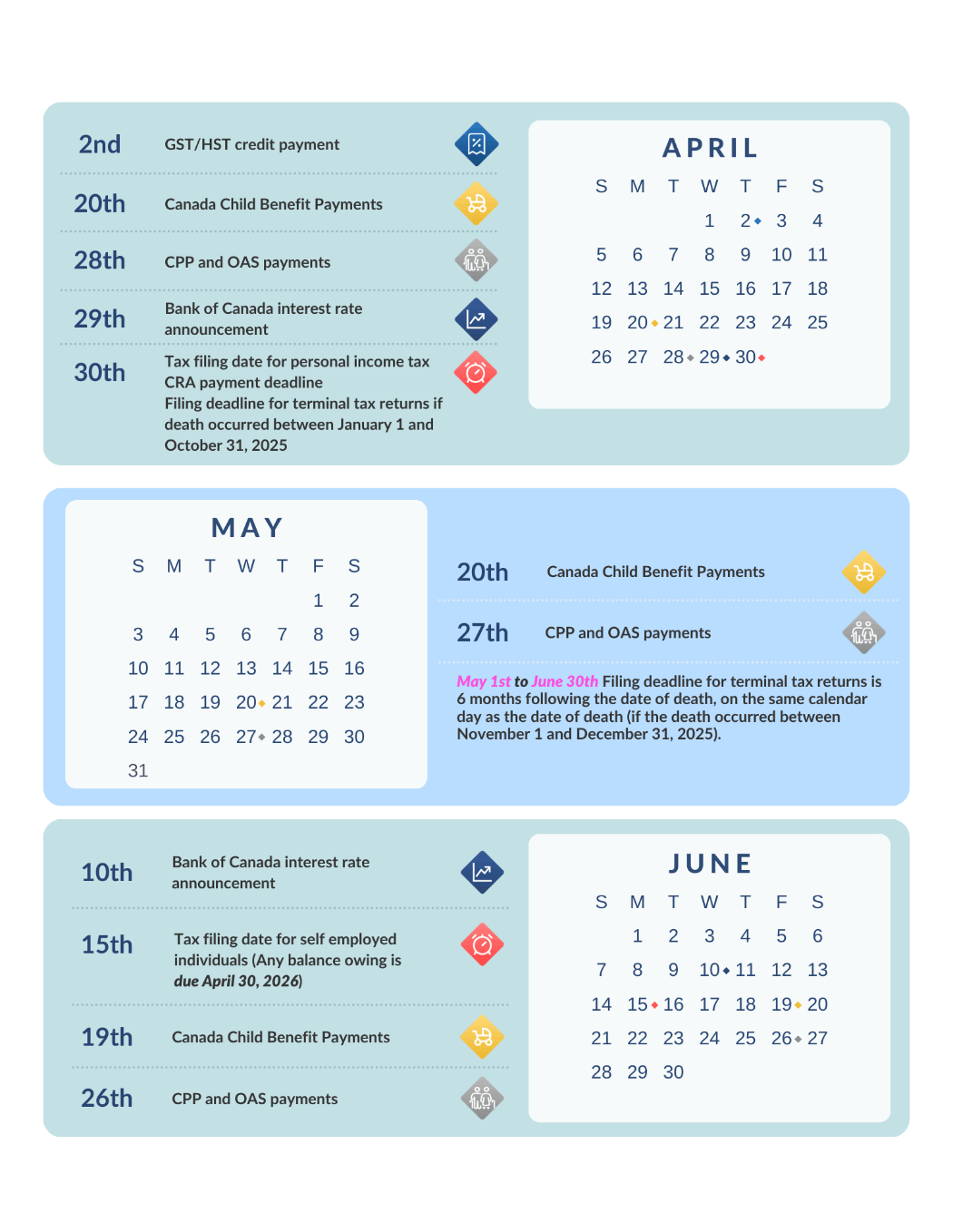
  • Tax Return Deadline: June 15, 2026.

  • Balance due must be paid by April 30, 2026.

Reporting Business Income

Report income on a calendar-year basis for sole proprietorships and partnerships.

Digital Platform Operators

Reporting rules require platform operators to collect and report seller information to the CRA. If income is earned through a digital platform, it is important to ensure it is properly reported.

Filing season for 2025 returns opens February 23, 2026. With a lower federal tax rate, increased contribution limits, and several eliminated credits and taxes, reviewing these changes before filing can help maximize savings and avoid surprises. The CRA is also no longer mailing paper tax packages, so returns and forms are available online at canada.ca or by calling 1-855-330-3305.

Sources

Canada Revenue Agency. “Personal income tax: What’s new for 2025.” – Canada.ca – https://www.canada.ca/en/revenue-agency/services/tax/individuals/topics/about-your-tax-return/tax-return/completing-a-tax-return/whats-new.html

Canada Revenue Agency. “Important changes to the 2025 income tax package.” – Canada.ca – https://www.canada.ca/en/revenue-agency/news/newsroom/tax-tips/tax-tips-2025/important-changes-2025-income-tax-package.html

Canada Revenue Agency. “Maximum Pensionable Earnings and Contributions for 2025.” – Canada.ca – https://www.canada.ca/en/revenue-agency/news/newsroom/tax-tips/tax-tips-2024/canada-revenue-agency-announces-maximum-pensionable-earnings-contributions-2025.html

Canada Revenue Agency. “Basic Personal Amount.” – Canada.ca – https://www.canada.ca/en/revenue-agency/programs/about-canada-revenue-agency-cra/federal-government-budgets/basic-personal-amount.html

Canada Revenue Agency. “Tax rates and income brackets for individuals.” – Canada.ca – https://www.canada.ca/en/revenue-agency/services/tax/individuals/frequently-asked-questions-individuals/canadian-income-tax-rates-individuals-current-previous-years.html

“Budget 2025 – Tax Measures” (Home Accessibility Tax Credit change) – https://budget.canada.ca/2025/report-rapport/tm-mf-en.html

This content is provided for general informational purposes only. It is not intended to provide investment, tax, or legal advice, and should not be relied upon as such.

2026 Canada Money Facts

brandableContent

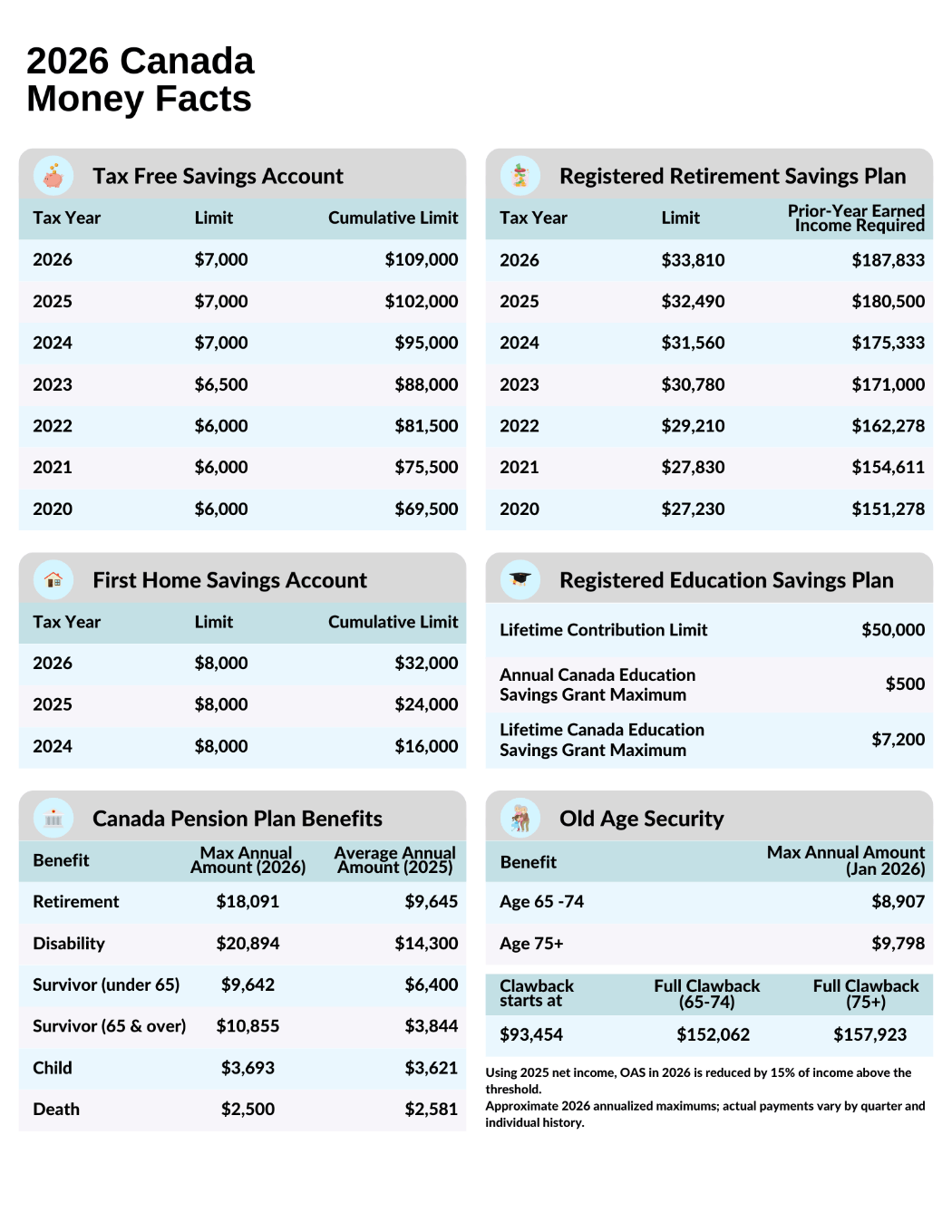
Staying informed about financial limits and government benefits is essential for effective planning. The 2026 Canada Money Facts infographic provides a clear snapshot of key savings limits and retirement benefits, including TFSA, RRSP, FHSA, RESP, CPP, and OAS.
Here’s what you need to know for 2026.

Tax-Free Savings Account (TFSA)

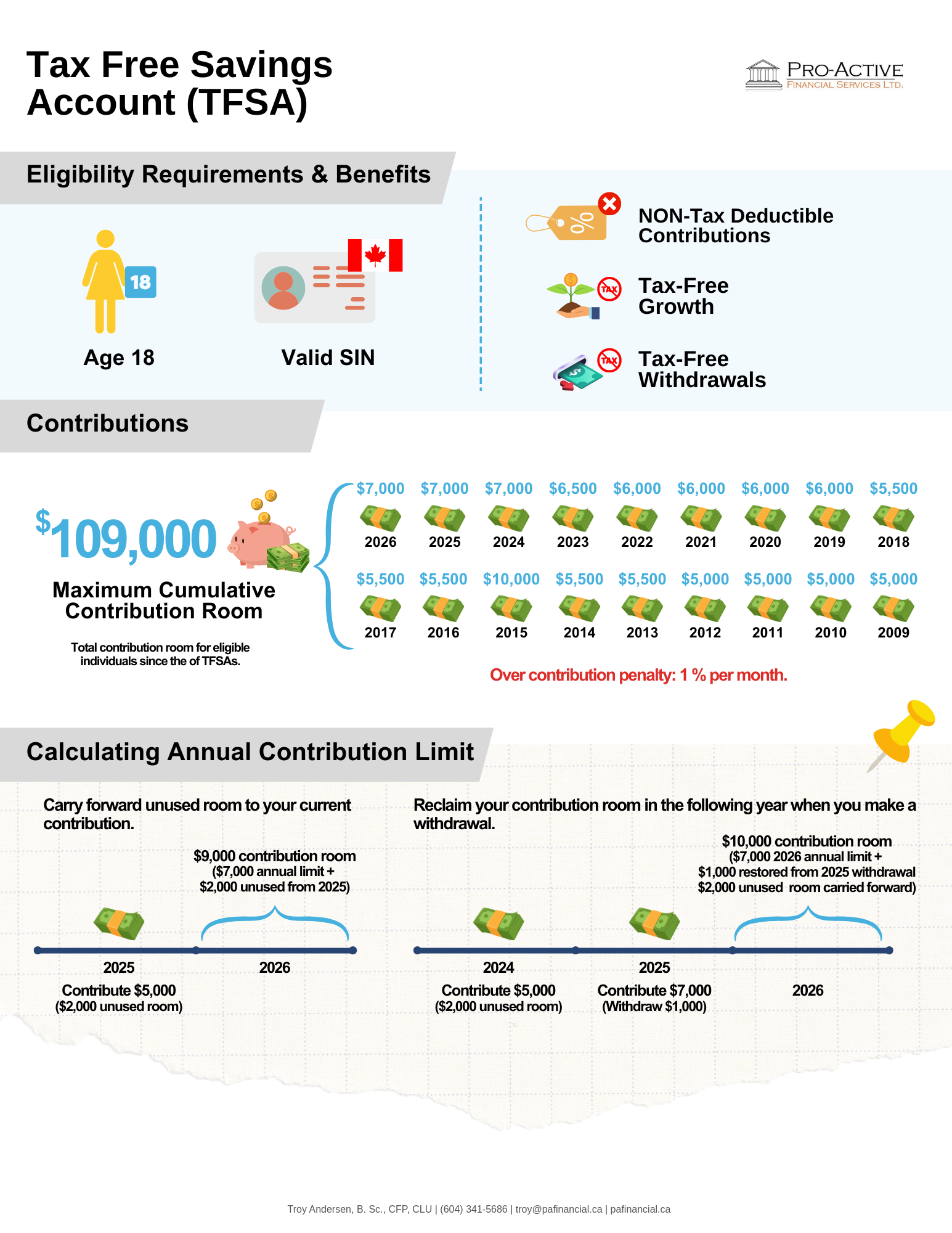
The 2026 TFSA contribution limit is $7,000, bringing the cumulative contribution room to $109,000 for individuals who have been eligible since the TFSA was introduced in 2009 and have never contributed.

It’s important to note that total TFSA room depends on personal circumstances. Eligibility begins at age 18 or 19, depending on the province, and newcomers to Canada accumulate room only from the year they become residents. If you became eligible after 2009, your cumulative limit will be lower based on the years you qualified.

The TFSA remains one of the most flexible savings tools available, allowing investments to grow tax-free and withdrawals to be made without triggering tax.

Registered Retirement Savings Plan (RRSP)

For 2026, the RRSP contribution limit is $33,810, calculated as 18% of earned income from the prior year, up to the annual maximum. To fully maximize RRSP contributions for 2026, an individual would need prior-year earned income of approximately $187,833.

RRSPs continue to be a cornerstone of retirement planning, offering tax-deductible contributions and tax-deferred growth, which can be especially valuable during higher-income earning years.

First Home Savings Account (FHSA)

The FHSA annual contribution limit remains $8,000 in 2026, with a cumulative contribution limit of $32,000.

As with previous years, FHSA eligibility begins at the age of majority (18 or 19, depending on the province), and contributions can only be made once the account is opened. Since the FHSA was introduced in 2023, not everyone will have access to the full cumulative room.

FHSA contributions are tax-deductible, and qualifying withdrawals for a first home purchase are tax-free, making this account a powerful planning tool for first-time homebuyers.

Registered Education Savings Plan (RESP)

RESP limits remain unchanged in 2026:

  • Lifetime contribution limit: $50,000 per beneficiary

  • Annual Canada Education Savings Grant (CESG): up to $500

  • Lifetime CESG maximum: $7,200

RESPs continue to be an effective way to save for a child’s post-secondary education while benefiting from government grants and tax-deferred growth.

Canada Pension Plan (CPP) & Old Age Security (OAS)

CPP benefit amounts increase for 2026:

  • Maximum CPP retirement benefit: $18,091 annually

  • Maximum CPP disability benefit: $20,894 annually

Actual CPP payments depend on an individual’s contribution history and the age at which benefits begin, but these figures provide a useful benchmark for planning purposes.

OAS payments for January 2026 are estimated at:

  • Ages 65–74: up to $8,907 annually

  • Ages 75+: up to $9,798 annually

OAS is subject to a clawback for higher-income retirees. In 2026, the clawback begins when 2025 net income exceeds $93,454. Full clawback thresholds are approximately $152,062 for ages 65–74 and $157,923 for ages 75 and over. OAS benefits are reduced by 15% of income above the threshold.

This 2026 infographic is designed as a quick reference to help Canadians stay informed and make confident planning decisions. Whether you’re maximizing registered accounts, preparing for retirement income, or saving for a home or education, understanding these updated limits helps ensure you’re making the most of available opportunities.

Staying proactive and informed in 2026 can make a meaningful difference in your long-term financial success.

B.C. Budget 2026: What It Means for You

On February 17, 2026, the B.C. government released its 2026 budget, projecting deficits of $9.6 billion for 2025–26 and $13.3 billion for 2026–27. The plan raises revenue through income tax increases, broader PST, and property tax changes. Most people will notice impacts in four areas: income tax, sales tax on services, property taxes, and family/volunteer benefits.

Higher income tax on your first dollars

Starting 2026, B.C.’s lowest tax rate rises to 5.6% from 5.06% on the first $50,363 of income. Basic credits (personal amount, age amount) use the same higher rate.

This affects nearly everyone—workers and retirees alike—with a small but noticeable provincial tax bump on 2026 returns. Top combined federal/B.C. rates stay the same: 53.5% on ordinary income, 26.75% on capital gains.

From 2027–2030, indexation of brackets and credits freezes. Rising incomes will push more into higher brackets, quietly raising taxes over time.

Takeaway: Maximize RRSP/TFSA contributions, income splitting, and timing of withdrawals/bonuses.

PST hits more services and items

From October 1, 2026, PST applies to:

  • Accounting/bookkeeping

  • Architectural/engineering/geoscience services (30% of price)

  • Strata/rental property management

  • Non-residential real estate commissions

  • Security/private investigation

Exemptions end for clothing patterns/yarn/fabrics, clothing repairs, basic cable, and landline/toll-free phone services.

Households face higher strata fees, renovation costs, and utility bills. Businesses see added service expenses.

Takeaway: Update 2026–27 budgets; business owners, review pricing/contracts.

Property taxes up for some owners

  • Higher school tax on homes over $3M

  • Rural property taxes rise (tied to GDP growth) from 2026

  • $200 northern/rural homeowner benefit ends Jan 1, 2027

  • Speculation & Vacancy Tax to 4% from 3% (2027+) for foreign/untaxed owners

High-value, rural, or vacant property owners face higher carrying costs. Non-residents may rethink holding underused homes.

Takeaway: Review property plans.

New support for families & volunteers

  • B.C. Family Benefit disability supplement: up to $6,000/child (from July 2027), tied to federal DTC, phases out above $50K family income

  • Tax reduction credit: max $690 (from $575) if income under $25,570

  • Volunteer firefighter/search & rescue credit: $6,000 (doubled) from 2026

Takeaway: Check Disability Tax Credit eligibility; ensure credits are claimed.

Next steps

These changes add up: small income tax hikes, broader PST, targeted property increases, plus select benefits.

If you’re wondering how these changes will affect your taxes or your long-term plans, let’s review your situation together and identify any adjustments that could keep you on track.

Sources: Province of British Columbia. Budget 2026: Stronger Together. Ministry of Finance, 17 Feb. 2026, www.bcbudget.gov.bc.ca/2026/.

This content is provided for general informational purposes only. It is not intended to provide investment, tax, or legal advice, and should not be relied upon as such. Information is based on current regulatory guidance and may change over time. Reporting formats and timing may vary by investment provider.